How to Fufill the New ABAWD SNAP Work Requirements
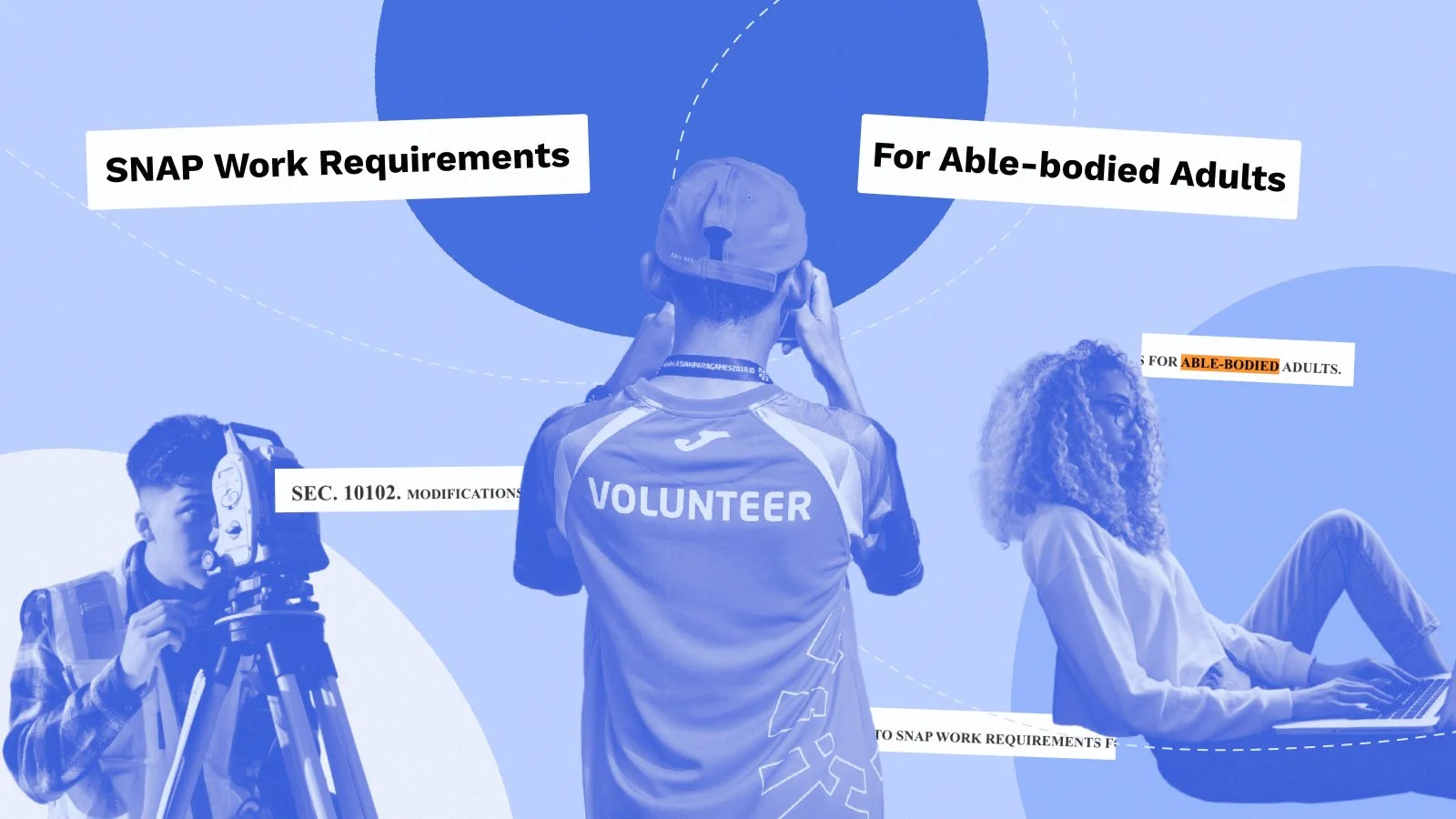
For SNAP recipients who fall into the “ABAWD” (“Able-Bodied Adults Without Dependents”) category, a work requirement of 80 hours per month, or an average of 20 hours per week, must be fulfilled. Today, we’re going to review the various ways that requirement can be met, and give you some concrete next steps to take if you fall into the ABAWD category.
How and when do I report that I meet ABAWD requirements?
Paid work: Hours can come from paid work, including full-time, part-time, seasonal, work in exchange for goods and services, and self-employment.
Volunteering: Volunteering with community organizations can count toward the requirement. In some places, you aren't limited to an agency-assigned site, so you may be able to choose a cause or organization that fits your skills and schedule
Job training and work programs: Qualifying programs include SNAP Employment and Training (E&T) components and certain workforce programs. These can also help you build skills and find a job.
A combination: You can mix employment, volunteering, and program participation to reach the monthly total. For example, 40 hours of work plus 40 hours of training adds up to 80 hours.
Earnings-based option (in some states): Some states allow people to meet the work requirement by earning a minimum weekly amount from work, regardless of the number of hours. Check whether your state offers something similar.
Your Next Steps
Read any notices carefully. Local SNAP offices typically send a written notice explaining whether the ABAWD work requirement applies to you, what you need to do, and your deadlines.
Screen for exemptions. Ask your SNAP caseworker to review every exemption, and share anything that might apply to your situation.
Pick a way to meet the hours. Choose the option that fits your life, whether that's a job, volunteering, a training program, or a mix.
Start tracking hours immediately. Use a calendar or timesheet, and get documentation from employers or volunteer sites as you go.
Report on time. Submit your hours or verification by each deadline. Deadlines vary by state, so if the deadlines are not clearly written in any communication you receive from your local office, check your state guidance to ensure you’re prepared to report your hours on time.
Reach out early if you're struggling. If you can't meet the required hours and don't qualify for an exemption, contact your local SNAP office caseworker before your deadline.
Who Can Help Me Find a Job, Volunteer, or Job Training Placement?
Local community organizations, nonprofits, workforce development programs, and SNAP E&T providers can provide support to you in your search for work or volunteer placements. Here are some resources to help:
You can utilize your local 211 to find organizations that can provide support, resources, and guidance in your search.
Find your local Workforce Development Board. They will be able to connect you to resources for resume-writing, interview practice, finding job opportunities, and more.
You can use this site to find information and contacts for your state’s SNAP Employment & Training program.
Select “Work” at FindHelp.org to find a listing of local job placement and training options near you
Check out Idealist.org to find 1,000’s of Volunteer Opportunities to fit your needs, and filter by location, causes, dates, in person or remote, and more.
Through Points of Light Engage, find numerous opportunities near you, which you can filter by issue area, skills needed, location, and more.
Read more posts from our ABAWD Series

Want to better understand the ABAWD work requirements introduced by H.R.1?
Join mRelief on November 5th, 2026 at 12 PM CT for our “SNAP ABAWD Work Requirements, What’s Changed and What to Do” webinar.
We’ll cover:
Who may be affected by ABAWD rules
Changes to eligibility and exemptions
Ways to meet work requirements and prevent gaps in benefits
Practical steps individuals and organizations can take now
You’ll leave with mRelief’s ABAWD Action Guide, including key questions to ask, steps to take before benefits are at risk, and ways to connect people to support.
The webinar will also feature perspectives from community partners, including advocacy organizations, food banks, and a state agency, on how they are responding to these changes and supporting their communities. Participants will also have space to share what they are seeing and experiencing.