

SNAP Saves Lives

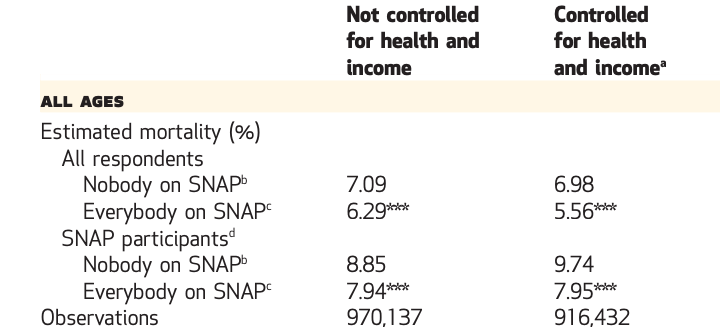
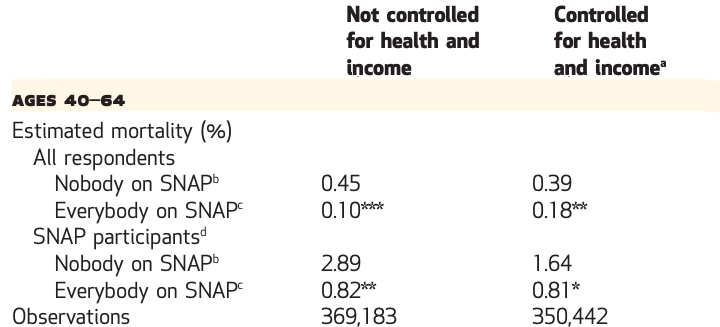
The first study to explore the causal effect of SNAP on mortality in 15 years was published this month. Shining a light on new evidence of the life-saving effects of SNAP, the new study published by the Journal of Health Affairs details the reduction in mortality rates among SNAP recipients. The study began by outlining previous benefits of the program — SNAP helps fight against food insecurity, SNAP lifts people out of poverty, and SNAP improves health outcomes and decreases health costs for adults and, especially, children. Adding to this pile of unignorable causal benefits of SNAP, the study found that SNAP led to a “reduction of 1–2 percentage points in mortality from all causes” and halved the rate of deaths of despair (premature deaths from alcoholic liver disease, poisoning, or suicide) among people ages 40–64.
All Causes
Deaths of Despair
The authors of the study highlighted the impact of recently-broadened eligibility requirements and the increase in online and simplified applications on program participation: “These policy changes are among the leading factors that underlie the increase in SNAP participation among adults ages thirty and older from 1994 (before welfare reform) to 2015 (after welfare reform and the Great Recession).” Linking the increase in accessibility of the program to health benefits, they theorized that “it is possible that the existence of food assistance creates a protective buffer for health even if the assistance is not accessed directly.”
These findings, in addition to the conclusions of the aforementioned studies, reaffirm the efficacy and benefit of SNAP on public health and well-being, calling into question the persistent cuts to the program in recent years. It is clear that instead of working to decrease access to SNAP, we need to uplift and spread the wide range of benefits the program can provide us all.
