

Recipient Centered Leadership on SNAP Policy

The Trump administration has recently proposed reducing the income limit for SNAP from 200% of the Federal Poverty Limit (FPL) to 130% in states that embrace the flexibility of the Broad-Based Categorical Eligibility (BBCE) policy. BBCE effectively allows states to increase the maximum income limit for SNAP from 130% to 200% FPL. Below is a chart that shows the limit based on household size:
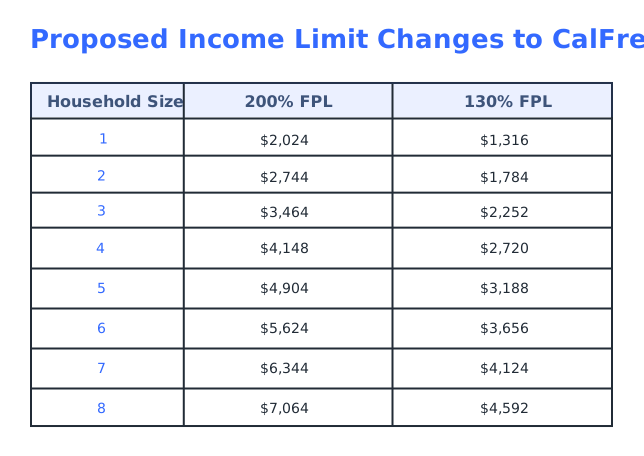
According to research by the Center on Budget and Policy Priorities, this affects policies in more than 40 states to help put food on the table for low-income working families. Further, this report shows that this will affect the asset limits for families, seniors, and people with disabilities who receive SNAP. Ultimately, it will cut 3 million people from the program.
Although the farm bill rejected adding restrictions to eligibility requirements to enable States to have flexibility to support these constituencies, President Trump is attempting to push this through Executive Action. From July 24, 2019 through September 23, 2019, the USDA welcomes comments from people through the Federal Registrar’s website voicing their response on this proposal.
At mRelief, the easy to use platform on web, text, and voice for people to sign up for SNAP, we believe in empowering recipient based leadership, as the people closest to the problem are closest to the solution. We have served more than 469,000 users across the country by connecting them to social services. In the aftermath of the rule announcement, we texted 362 families asking them to share their thoughts about the proposal.
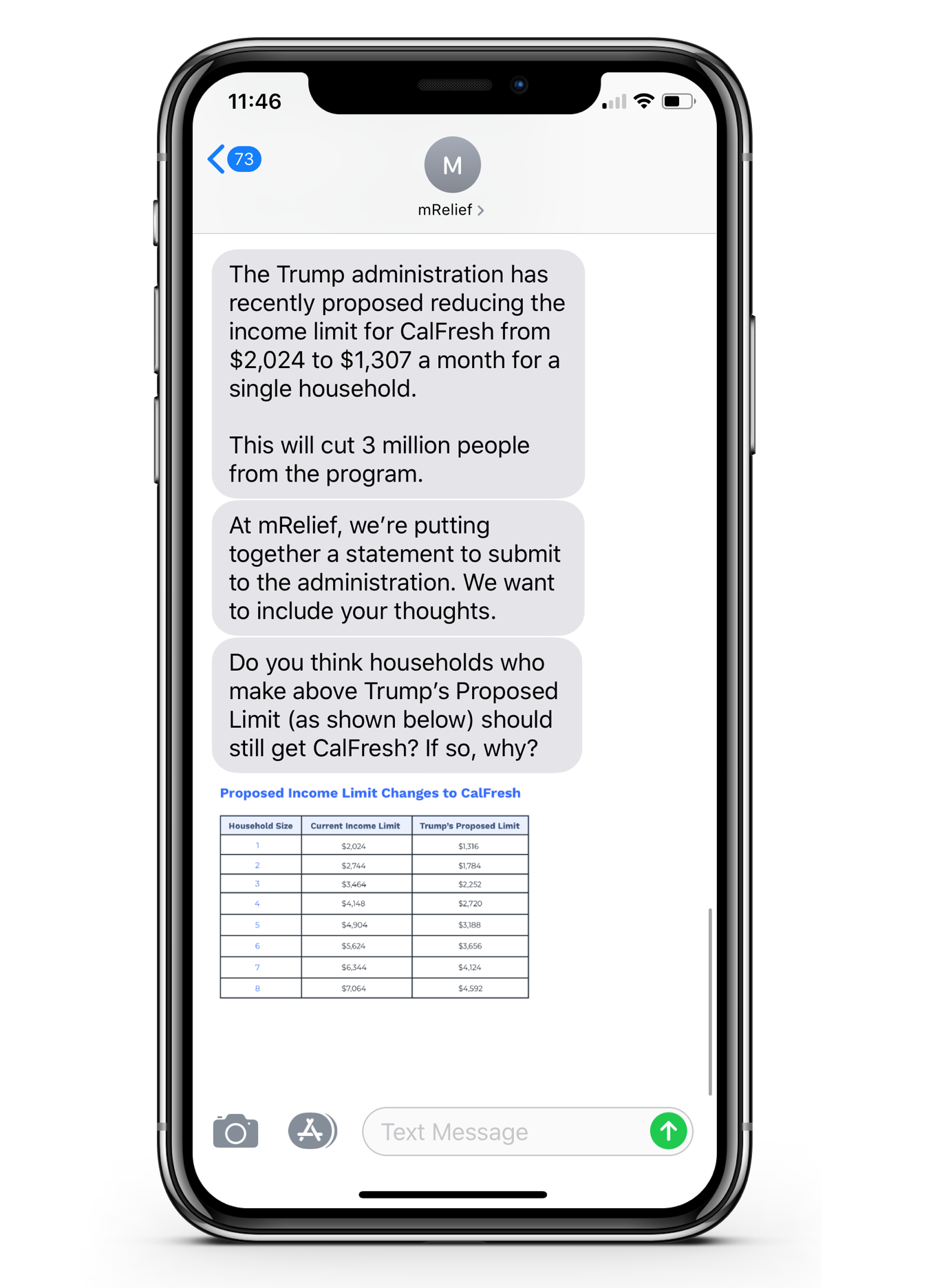
Everyone who responded thus far, excluding 1 family, expressed vehement disagreement. Here are excerpts from our users about this proposed rule:
Lisa S. from California texted about the impact of this rule on her health, “My health will suffer causing HIGHER Medicare payments. I’m not the only one that'll have increased medical costs.” Lisa pointed out, “I'd have income $102 higher than allowed, I'd be cut. Survival as a disabled adult American citizen ought not include suffering and struggle for food.”
Other SNAP beneficiaries talked about the current cost of living: “I feel that this is so wrong because of the high price of groceries and limited income in the household that we the people who have worked so many years but can barely make ends meet need this to be able to eat and stay healthy not just for ourselves but for the children who go to school hungry because their parents can't afford food for them. So for him to reduce this is just not right!”
J. from Massachusetts texted us, “...the cost of living is very high and cutting the limit will hurt people and the economy, as it goes back into our economy...”
Dawn O. from a household of 3 in California shared, “$3,464 is not enough to live on in the state of California...the limit should be raised not lowered.” She also shared, “If you are forced to pay over $2,000 just for a very small place to live, there's no way without assistance you can survive short of homelessness.”
Others spoke about the affect the proposal would have on their day-to-day lives. “Reducing the income limit may mean reducing the number of times the households will eat in one day. Especially now that the cost of everything is going up. The buying power of a dollar has greatly diminished,” said a user from a household of 4.
Another respondent, who asked to be anonymous, from a household of 2 said, “It is impossible for a 2 person family to live off of $1,784 as it is with benefits. I can't imagine having to live without food help and that little income.”
Another user from Massachusetts said, ”just because people make that or more doesn't mean they don't struggle."
