

SNAP outreach: Reaching populations under-enrolled in food stamps
Key Takeaways
- 8 million individuals are likely eligible for but not receiving food stamps.
- Many people don’t know they are eligible. Others choose not to apply due to stigma or the long enrollment process.
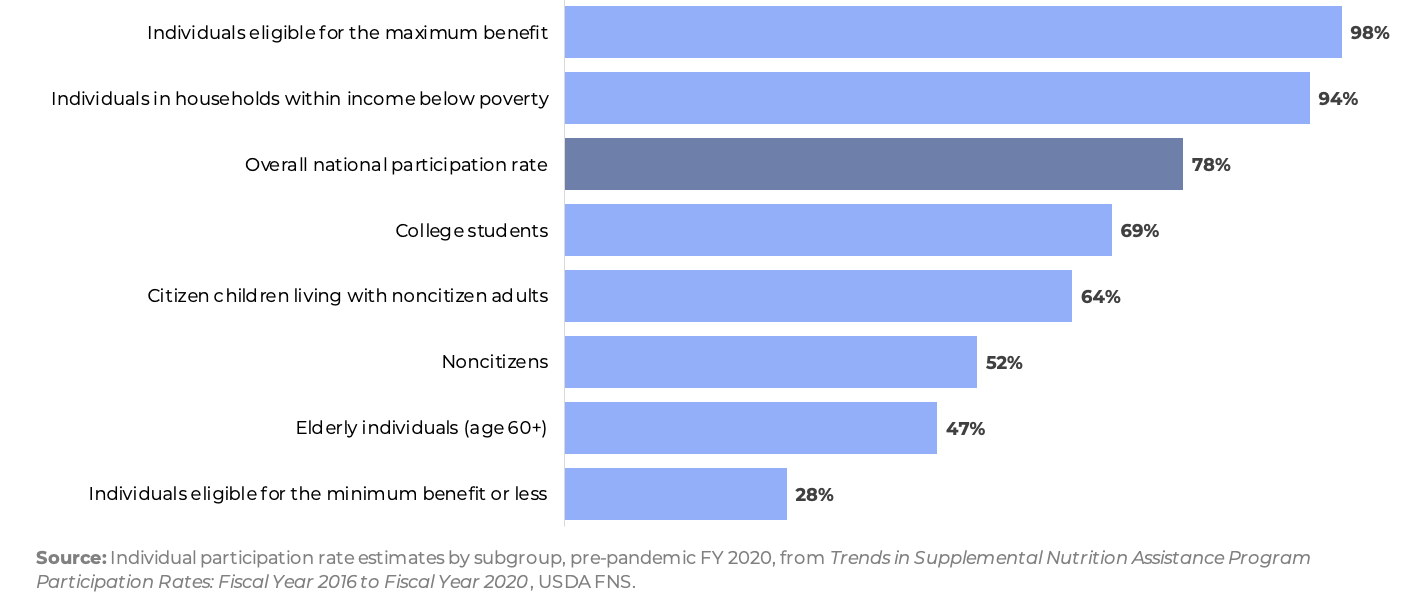
- Just 69% of likely eligible college students enroll. Among seniors, only 47% of those likely eligible enroll. Similarly, just 52% of likely eligible noncitizens are enrolled.
- mRelief makes it easy to enroll in SNAP. We share information through digital marketing and provide dignified enrollment assistance.
The United States Supplemental Nutrition Assistance Program (SNAP; also known as food stamps) helps over 20 million households buy food each year. There are still 8 million more individuals who are likely eligible but not receiving food stamps. Some people don't know about it, or they think it's too hard to sign up.
Differences in participation
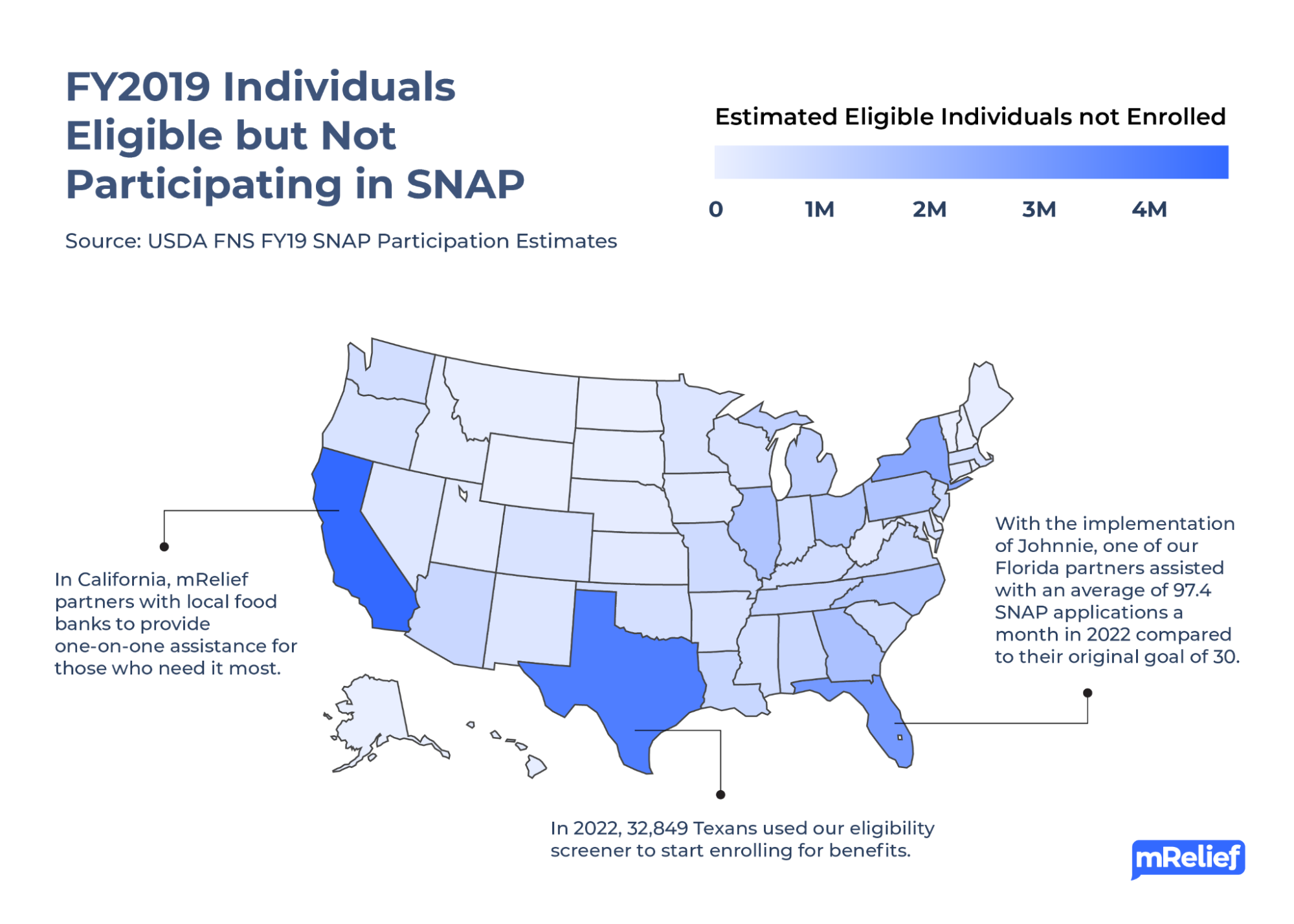
Around 82% of eligible individuals receive food stamps nationwide. The gap in SNAP participation varies widely from state to state. Wyoming has the lowest participation rate, with just 55% of eligible individuals enrolled. By contrast, several states enroll nearly 100% of those likely eligible.
Some evidence suggests that restrictive food stamps policies lead to lower participation (source). We analyzed the relationship between state-level SNAP-access scores and participation rates. Researchers at Johns Hopkins created state SNAP-access scores based on SNAP landing and enrollment web pages. They rated the flexibility of each state’s enrollment process, the efficiency of finding information about enrollment on SNAP websites, and the accessibility of SNAP webpages. We found a small, positive correlation between higher access scores and participation rates. State policy differences explain some differences in participation. However, population factors also play a role.
Some populations participate in SNAP at higher rates than others. The strongest predictive factor of enrollment is need. Individuals who have lower incomes are more likely to enroll. People who experience certain trigger events (e.g., loss of a job) enroll more often than those in more stable circumstances.
Certain groups of people are also consistently under-enrolled in the food stamps program. Just 69% of likely eligible college students enroll in SNAP (source). Among seniors, only 47% of those likely eligible enroll (source). Another group likely to be under-enrolled in SNAP is noncitizens. Just 52% of likely eligible noncitizens receive food stamps (source).
Individual Participation Rate Estimates by Subgroup, FY2020
Best practices for reaching populations under-enrolled in SNAP
- Increase awareness of the food stamps program by sharing information about eligibility. Targeting households near the cutoff for income eligibility is especially effective. These people are more likely to think they are not eligible for food assistance (source). It is also important to continue sharing information about SNAP program eligibility while individuals apply. One study found that 46% of people who quit the application process believed they wouldn't be eligible for food stamps (source).
- Make it easy for eligible households to enroll in SNAP. Another reason people quit the process is because of administrative or process factors. These factors account for up to 27% of people who stop before submitting a SNAP application (source). mRelief helps remove these barriers.
How mRelief reaches populations under-enrolled in SNAP
- Students. mRelief makes it easy for students to find out if they qualify for SNAP. Students enrolled half time or more in higher education must meet more requirements for SNAP. 13% of households we screened in 2022 included at least one student who met that definition. We work with several colleges and universities to connect their students to SNAP. We would like to build more partnerships to reach this population.
- Seniors. mRelief’s digital marketing efforts are highly effective at reaching older adults. 40% of households we screened in 2022 included at least one household member over the age of 60. We recently examined trends in areas where mRelief has an enrollment partner. We found that older adults, and older adults of color in particular, are most likely to request help to apply for food stamps.
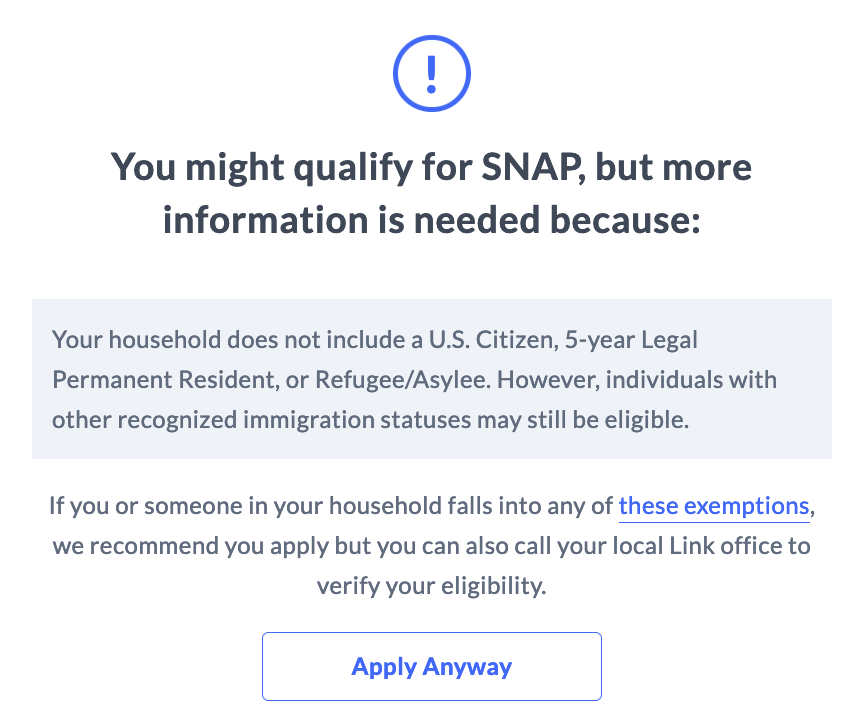
- Immigrant and mixed status households. There are many rules around immigration status and SNAP eligibility. We aim to provide noncitizen and mixed status households with clear information. Our eligibility screener lists the most common immigration statuses that are eligible for food assistance through SNAP. If a household does not include at least one member with one of those statuses, we provide more information about qualifications.
We translate our products into additional languages to improve accessibility. Right now, our users can complete the enrollment process in English and Spanish. Soon we will begin offering enrollment support in Haitian Creole. We plan to expand to more languages over time.
SNAP outreach is critical to reaching under-enrolled populations
mRelief’s end-to-end SNAP enrollment service efficiently reaches populations under-enrolled in food stamps. Our simplified, mobile-friendly SNAP application has been found to increase food stamp submission rates by up to 27%. Our CRM Johnnie enables mRelief's SNAP outreach partners, such as local food banks, to more easily help households apply, which increases submission rates even further. Partnerships like these have enabled us to connect millions of households to food stamps. With their help, we increase awareness and remove barriers to enrollment.
You can help us connect more families to food stamps
