

The Evolution of Food Stamps: Then, Now and the Future

Food Stamps, now known as the Supplemental Nutrition Assistance Program (SNAP), is a nationwide federal aid program that provides food assistance to people living in the US. If you’re eligible, the SNAP program helps you stretch your food budget by providing a monthly benefit for groceries.
The evolution of SNAP spans decades and has been expanded and reconstructed many times over with new guidelines, restrictions, tech changes and distribution processes. Below is an overview of some milestones and pivotal changes SNAP has made over the years.
The Debut (1939-1943)
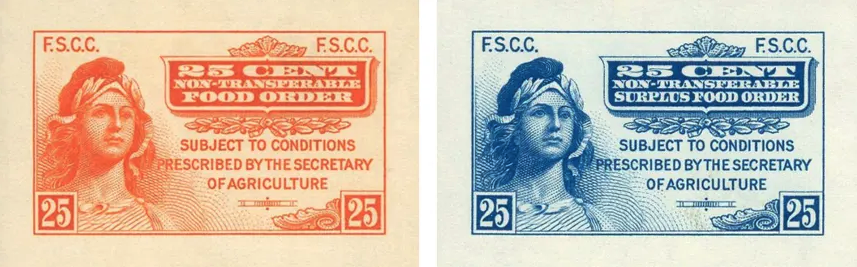
Originally created during the Great Depression, SNAP debuted in Rochester, NY in 1939. The program permitted people to buy orange stamps equal to their normal food expenses, while blue stamps bought only surplus foods. Over the next 4 years, the program reached approximately 20 million people. In 1943, the program ended because it was no longer considered necessary.
Food Stamp Program Revival (1961-1964)
President Kennedy called for expanded food distribution on February 2, 1961. By January 1964, the program expanded to 22 states with a total of 380,000 participants.
The Food Stamp Act of 1964
On August 31, 1964 President Lyndon B. Johnson expanded the program and signed it into law, making it permanent. The purpose behind this was to improve nutrition among low-income households and bring the FSP under congressional regulation and control. The Act also prohibited against discrimination on bases of race, religious creed, national origin, or political belief and required states to have a plan of operation and development of eligibility standards.
Legislative Changes (1971-1974)
During this time period, concerns about timely certification drove two key pieces of legislation. The Food Stamp Act Amendment of 1970 created national eligibility standards and work requirements. Under the Agriculture and Consumer Protection Act of 1973, the USDA began paying 50% of the administrative costs.
The Food and Agriculture Act of 1977
This Bill focused on increasing access to those most in need, while simplifying and streamlining a complicated process that delayed benefit delivery. Parts of the enrollment process could be completed by mail, over the phone or through home visits.
Intro & Development of EBT (1984-2004)
Debuting in Reading, Pennsylvania, in 1984, the Electronic Benefits Card, could now be used to buy eligible food items with benefits issued directly on an electronic card similar to a credit or debit card. This, in turn, enhanced the delivery of benefits and helped cut back on fraud by creating an electronic record of each transaction.

The Farm Bill of 2002
This bill restored eligibility to immigrants who have been in the United States at least five years, are receiving disability payments, and all children regardless of how long they have been in the country.
Program Name Change 2008
Owing to the stigma surrounding the phrase “food stamps,” the program’s name was changed to the Supplemental Nutrition Assistance Program (SNAP).
Revised ABAWD Policy 2019
In December 2019, the USDA finalized a new work requirement change, which affects people between the ages of 18 and 49 who are disabled and childless. The new rule is to go into effect in April 2020, making 700,000 Americans ineligible for benefits. Under this law...
- Able body adults without dependents are limited to 3 months of benefits within a 36-month period, unless they work 20 hours per week.
- People who participate in certain job training or educational training are exempt.
- States are only able to waive the requirement if the area has an unemployment rate above 7 percent.
New Roll Out 2020
USDA will roll out the EBT Special Supplemental Nutrition Program for WIC program for all states and territories.
Resource Links:
https://www.fns.usda.gov/snap/supplemental-nutrition-assistance-program
https://fns-prod.azureedge.net/sites/default/files/History_of_SNAP.pdf
