

Beyond the Books: The Harsh Reality of College Hunger

Key Takeaways
- Many college students suffer from food insecurity, but do not know that they may qualify for SNAP benefits. Only 43% of 3.3 million SNAP eligible college students reported receiving benefits in 2016.
- mRelief’s former Interim Executive Director and current Director of Strategic Partnerships, Porschia Davis, shares her experience applying for and benefitting from SNAP as a college student.
- mRelief has partnered with Student Basic Needs Coalition to increase access to SNAP benefits for college students.
The state of college student hunger
In a recent memo from the USDA to all state agencies issuing Supplemental Nutrition Assistance Program (SNAP), the federal government agency spotlights a few key populations that are in need of increased access to and awareness of SNAP benefits (formerly known as food stamps.) A surprising group among the list is college students, or as the USDA defines them: applicants currently enrolled at Higher Education Institutions (IHE’s).
A COVID-19 exemption made it easier for college students to be eligible for SNAP, but expired in July of 2023. In response, higher education institutions across the country started seeking help from state and local partners to navigate the complex SNAP eligibility process for their student communities. The recent USDA memo references this change and encourages Institutions of Higher Education to proactively share up-to-date information about SNAP eligibility.
Applying for SNAP can be difficult for all populations, especially students. College students must navigate additional eligibility criteria, such as proving both their enrollment status as full-time along with their work hours or participation in work-study programs. Juggling a full-time academic course load along with the required work hours leaves little time for interpreting complex SNAP rules and completing lengthy applications.
A recent research brief from the Food Research and Action Center (FRAC) emphasizes the important difference that SNAP makes in improving health, nutrition and well-being, and highlights the voices of a few college students who have been able to take advantage of the resource.
"I didn’t realize food affects my mood so much before. I would just [get] 2 to 3 hours of sleep ... and my grades [suffered]. Even though I studied, it didn’t help at all because I wasn’t understanding. But now, I’m eating and get what I’m doing in class."
— College Student interviewed by FRAC
On the mRelief team, Porschia Davis has been a passionate advocate for college students in particular, cultivating multiple referral partnerships with institutions of higher education, including University of Illinois in Chicago, National Louis University, Roosevelt University and Governors State University. Her passion is informed by direct experience.
“In college, I sought out SNAP benefits myself. Even with a full-ride scholarship, I needed the additional resources to save money on groceries, contribute to unexpected school expenses, and help my family reallocate their money to household expenses and raising my other sibling.”
Unfortunately, Porschia’s experience with the SNAP application process was a story mRelief hears all-too-often among our clients.
“When I first started the application process, it was humiliating and difficult. There was no guidance or support available for me and even being a well-educated student, I still had challenges with understanding the requirements of submitting a completed application. I was denied multiple times, but I was determined… I knew I qualified for it.”
Despite the discouraging attitudes and initial denials from state workers, Porschia persevered and ended up receiving SNAP benefits.
For Porschia, SNAP benefits were a key part of her educational journey in more ways than one. Only a few years after graduating with a degree in Communications, Porschia joined our then-startup nonprofit mRelief, aiming to transform the process of applying for public benefits for the inherent dignity of all. More recently, for the past year as Interim Executive Director and Director of Strategic Partnerships, Porschia has led mRelief always with an eye toward not only the numbers we serve and the dollars we unlock, but also with a priority on how the process feels for the applicant. “There is no need for shame when asking for a public benefit that you qualify for.”
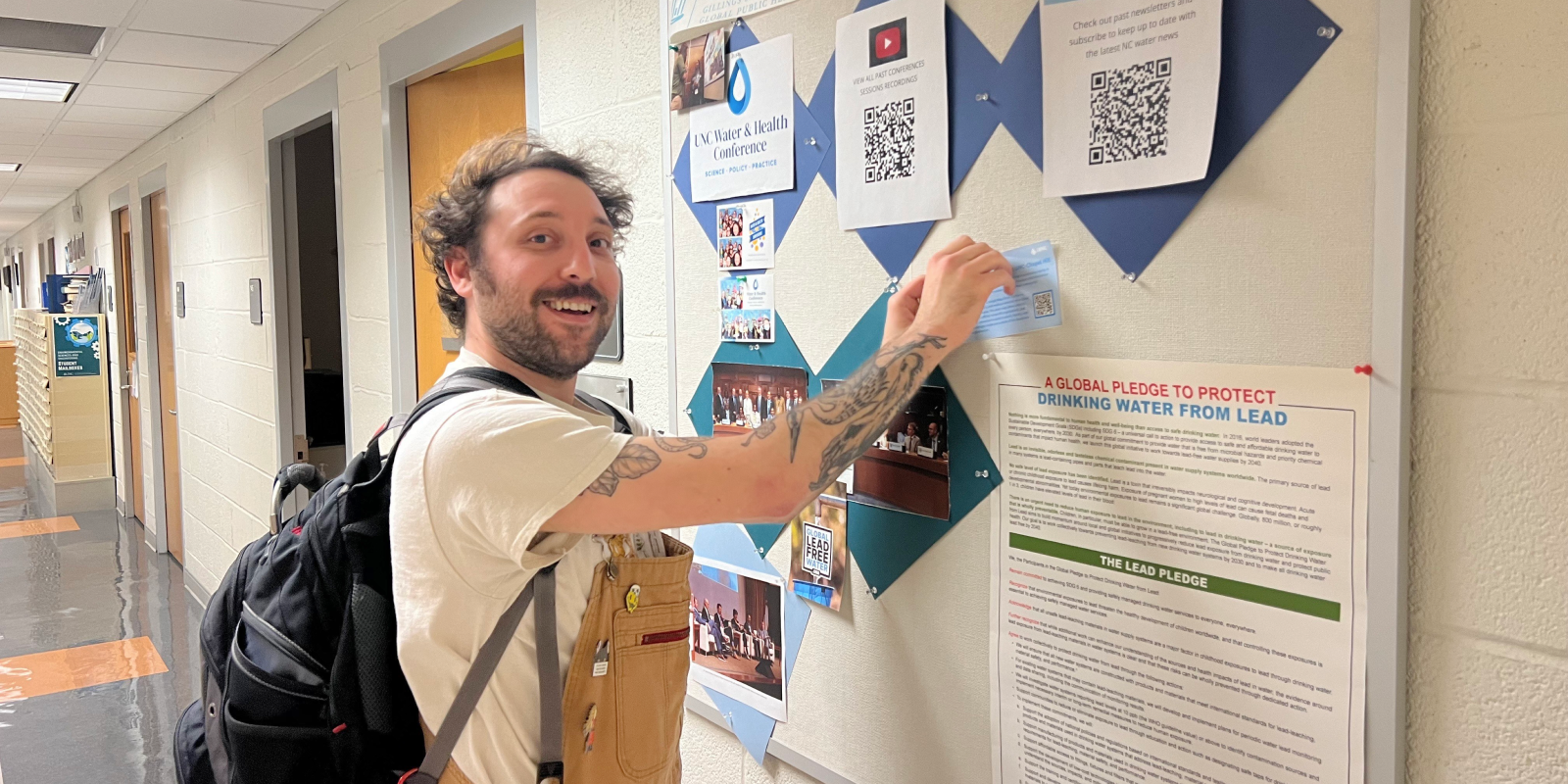
A student at University of North Carolina posting a SNAP eligibility flier on a campus board.
mRelief’s “SNAP Into Action” partnership with the Student Basic Needs Coalition
mRelief is currently growing a multi-regional partnership with the Student Basic Needs Coalition, whose SNAP Into Action program has brought mRelief to 89 universities and colleges nationwide to help educate students on SNAP eligibility and empower them to apply for SNAP in a simplified and accessible way. As Ragan, the President of the Student Basic Needs Coalition Chapter at The University of Alabama, explained, “Time is a commodity. I want students who need resources to get them quickly, and mRelief helps solve that.”
If we can’t eat, we can’t learn. And since higher education is the most direct route to long-term financial sustainability, mRelief is grateful to be a part of this important life-journey for so many at institutions such as West Virginia University, University of South Carolina, and Howard University. mRelief started the partnership with Student Basic Needs Coalition in July of 2023 and estimate that, together, we’ve already unlocked $770,486.64 in SNAP benefits for college students.
