

'Why do you need my phone number?' Addressing a Common Barrier

On the last page of our SNAP eligibility screener, we ask our clients to provide a phone number. We need a phone number so that we can:
- Remind clients to apply for benefits
- Help them verify their account
- Notify them about changes in the SNAP program
- Provide information about other social services
When we follow up with our clients, we increase the chance that they will enroll in the program. The original version of this question, shown in the picture below, asked for a phone number and shared some context on why we needed this information.
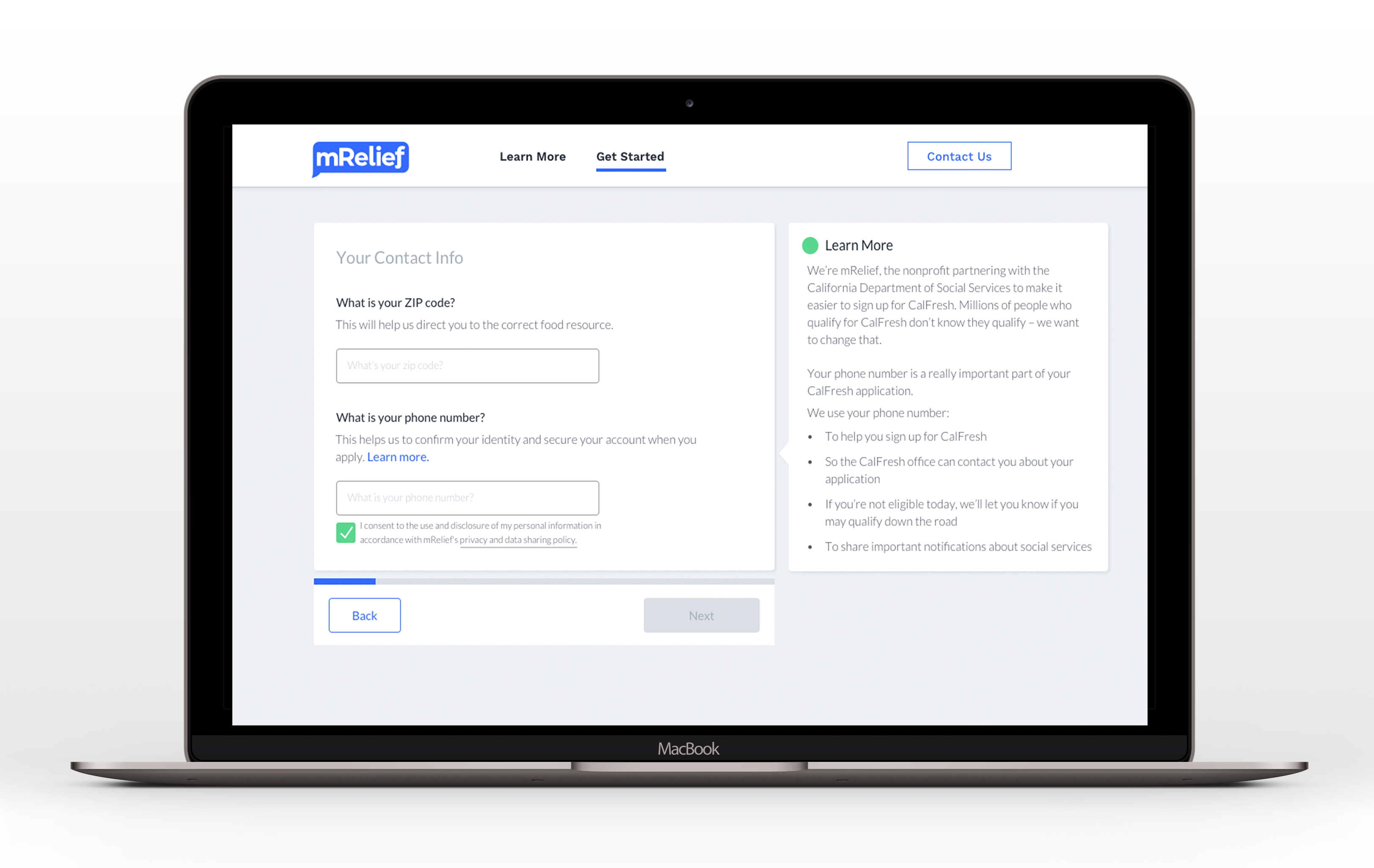
As a baseline, 54% of people who start the eligibility screener share a valid phone number. In an effort to increase these numbers, we created and tested alternatives to our existing phone number page on the screener.
Focusing Our Goals
Working with such a specific goal made it challenging to discover existing research on the topic. Through researching the issue and leveraging UX Design best practices, we were able to come up with some hypotheses of our own:
- Were people not providing their phone number because it wasn’t required?
- Were people wary of providing personal information online?
- Were people interested in providing a different source of contact information?
- Were people frustrated that they would fill out the entire screener and be hit with the “big ask” of providing a phone number at the end of the process?
These hypotheses lead us to design and test a couple of options to get to the answers.
Tell It Like It Is
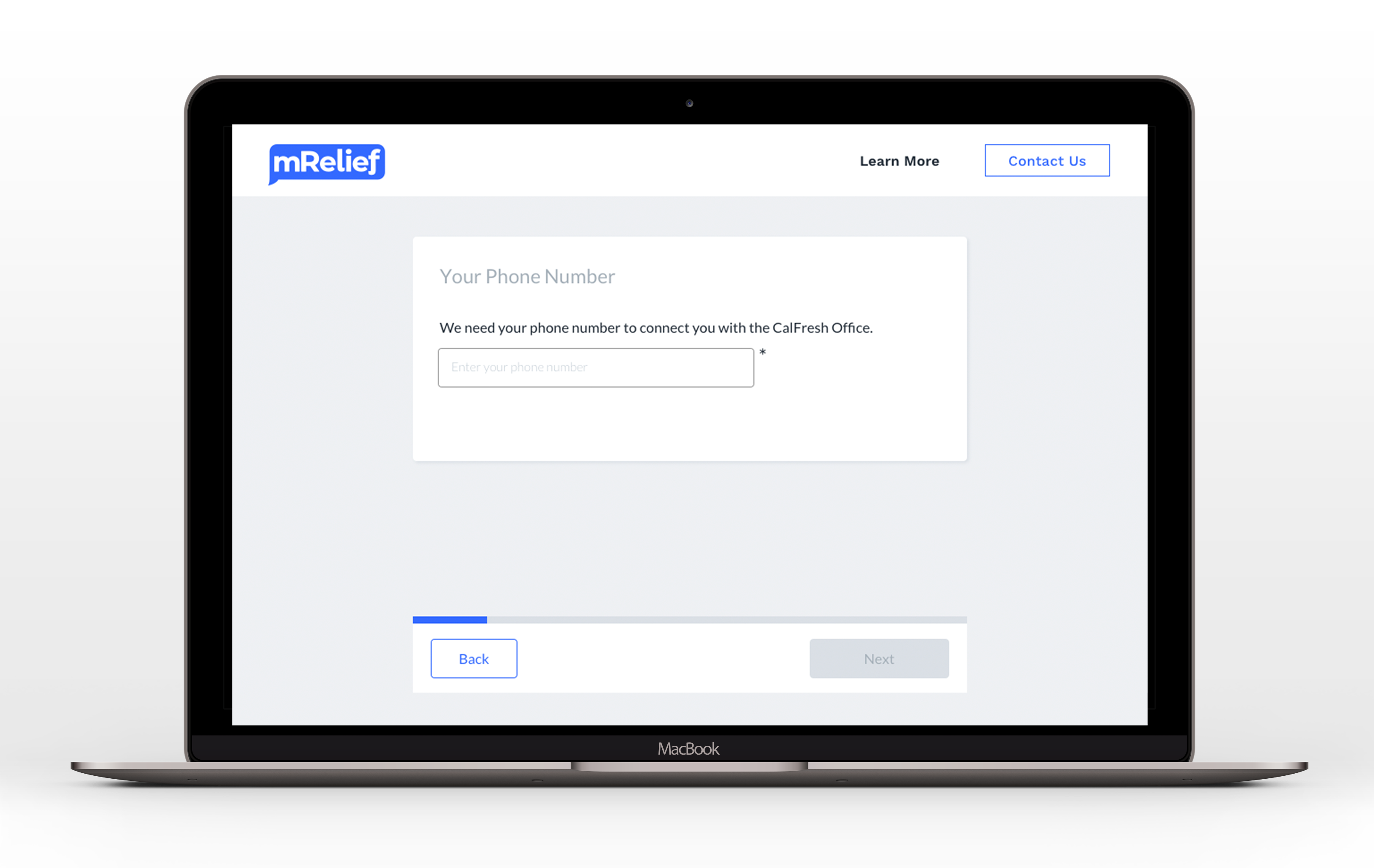
With privacy and security concerns on the rise, it’s no surprise that clients are concerned about providing personal information on a website. In an effort to combat this issue and to be more transparent, we decided to create an option that simply and clearly tells clients why we need their phone number—In order to connect them with their local SNAP office. We also removed possibly triggering words and phrases such as, “identity” and “secure your account” in order to simplify our language even more. Lastly, we made the phone number form field required in order to continue through the screener, rather than allowing clients to skip the page as we did previously.
Providing Alternative Methods of Contact
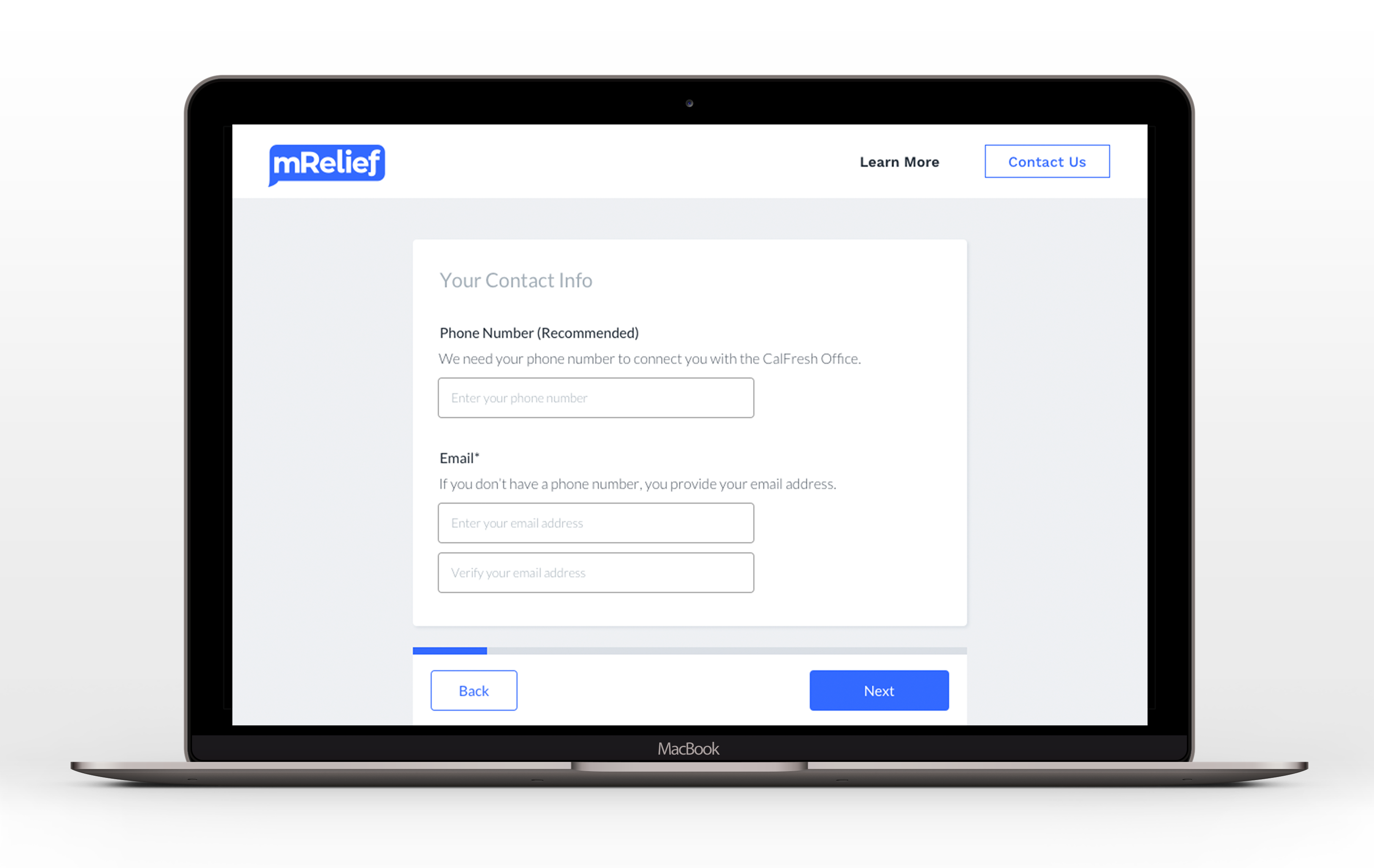
For our second option to test, we focused on whether people were averse to providing a phone number and if an email address would be a better way to re-engage them to follow through with the application process. To do this, we left the option to supply a phone number and flagged it as the “recommended” action. However, we also included the ability to provide an email address in case the phone number was deterring clients from continuing.
Learning Moments
Lastly, we wanted to address our hypotheses regarding the placement of the phone number page within the screener. As an additional variable in our research, we moved both of these options to the beginning of the screener in order to be upfront with the ask of a phone number. In the end, maintaining the phone number question at the end of the screener was more successful by 6.6%.
Our Findings
After reaching our goal of collecting roughly 100 samples for each test, we analyzed our findings. The first option—“Tell It Like It Is”—increased our valid phone number rate to 57% and is now the way we ask for phone number on all of our eligibility screeners across the country.
