
While our work at mRelief has centered on signing people up for SNAP, we also provide innovative text messaging tools to help agencies modernize notices and help clients meet their reporting requirements on time. This work is especially relevant to the category of Able Bodied Adults Without Dependents (ABAWD). ABAWD pertains to SNAP clients who are between the ages of 18-49, without children, and without disabilities and who are not working and do not meet any of the exemptions. These clients can only be on SNAP for 3 months for every 36 month period. As ABAWD waivers expire, here are 3 ways we plan to use text messaging to help states comply with some of the recommendations and reporting requirements from FNS.
Case 1: Empowering People with ABAWD Information During the Interview
One of the requirements states must meet happens during the SNAP interview for initial certification.
Item 1 of this USDA policy memo on ABAWD states the following: State agencies must inform ABAWD and potential ABAWD households of the time limit, work requirement, and exemptions to the ABAWD work requirement. At a minimum, state agencies must provide this information to affected households during the eligibility interview.
Today, the state of Delaware, which has never requested this exemption, currently uses this script during the interview process.
For states considering automating their interview process, we see great potential for a future where digital tools, such as text messaging, will be leveraged to implement the Community Partner Interview Demonstration project. (More here on page 1)
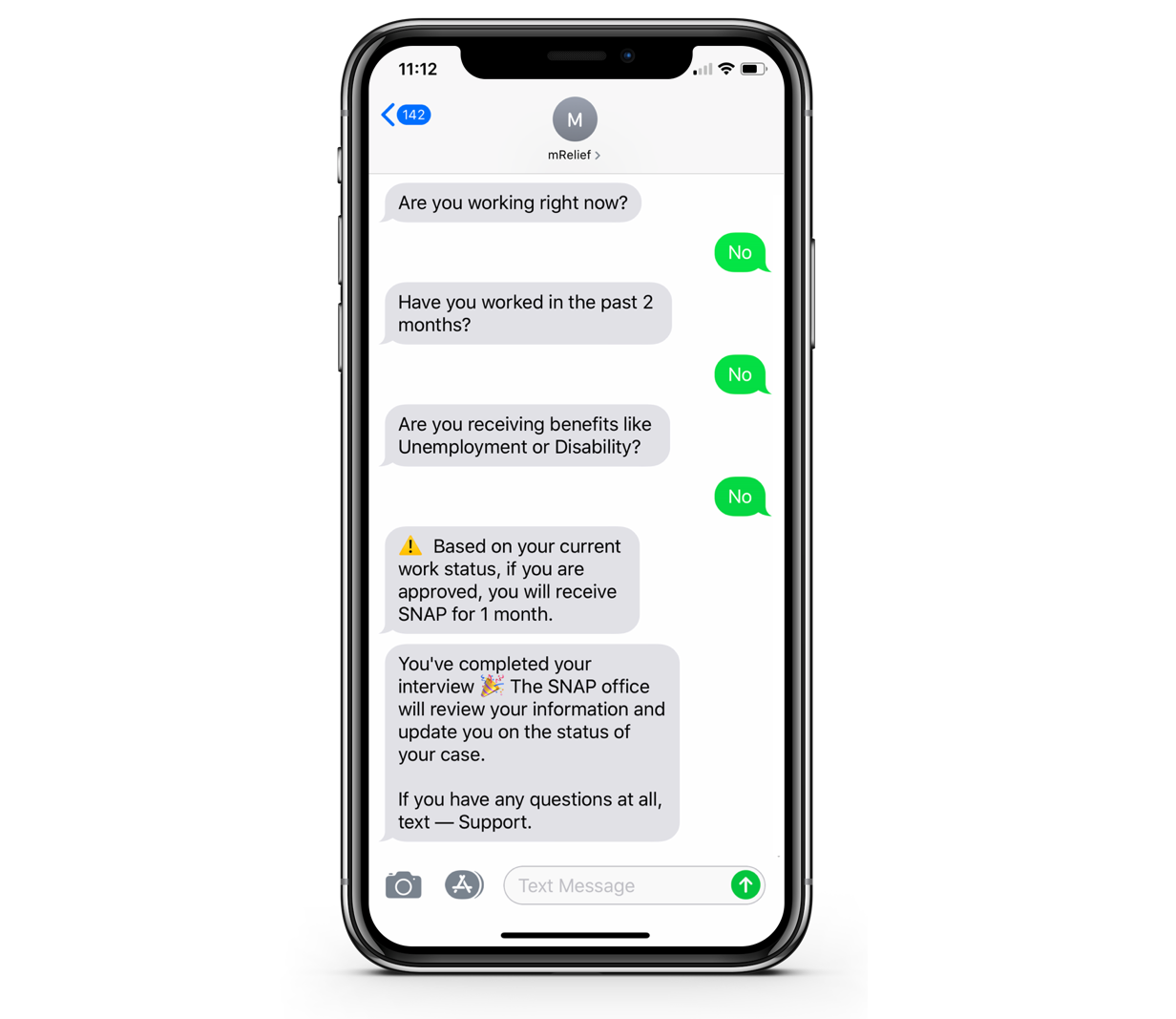
To comply with this rule, after consulting the state agency’s database on whether the client has received SNAP in the past 36 months, mRelief’s interviewer platform could empower clients about their ABAWD status during the interview. In the below example, the client has one more month to receive benefits unless their work status changes.
Case 2: Notifying Clients After the April 1st Waiver Expires
Another area of compliance where states are strongly encouraged by FNS to provide notices is when an ABAWD waiver is expiring and SNAP participants will be newly subject to the time limit.
One way mRelief can assist with this process is leveraging our pre-screening tools, available in 44 states, to help clients determine if they will be affected based on their present circumstances. See an example below on one particular case.
Case 3: Discontinuance 10 Days before the 3-month Mark
Another requirement of states pertains to clients who have been unable to meet the ABAWD work requirement. In the aforementioned notice, Item 3 explains two additional requirements:
-
They must notify the client at least 10 days before any resulting reduction or termination in benefits that they are subject to the ABAWD time limit and have failed to meet the ABAWD work requirement.
-
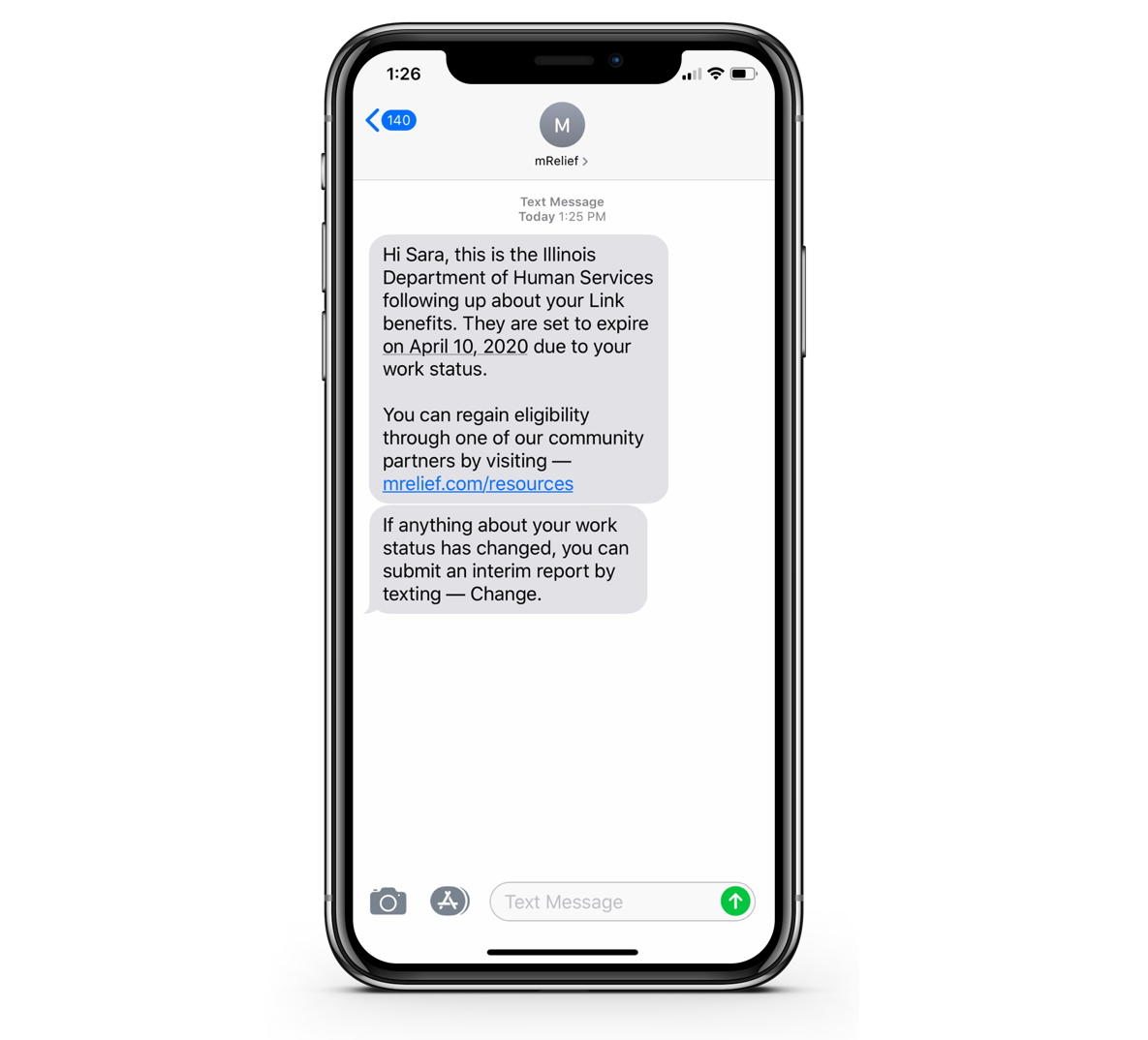
The State agency must also provide information on how the client who does not meet the ABAWD requirement can regain eligibility.
Terri Gallagher, SNAP Administrator at Delaware Health and Social Services notes, “If the case is still open and a client starts working it may be possible for it not to close.” Thus, the below example provides an opportunity for states to comply, but also to complete a change report over text messaging.
To support states in this process, these tools will be listed on the GSA on January 31, 2020. For more information, email partner@mrelief.com.